
Categories: AI For Data Analytics, AI Models, AI Research Papers, Web3
Bosch AI Center: More Than Just Corporate R&D?

Let's be honest. Every major company on the planet seems to have an "AI Innovation Hub" or a "Center for Digital Excellence" these days. It's the new corporate must-have, right next to the fancy coffee machine and a rarely used ping pong table. So when I first came across the Bosch Center for Artificial Intelligence (BCAI), my inner cynic raised an eyebrow. "Here we go again," I thought. "Another polished landing page with vague promises about 'synergizing the future'."
But then I started digging. And you know what? I think I was wrong. BCAI feels different. It feels… substantial. It’s less of a blue-sky research lab floating on a cloud of theory and more like a high-tech engine room, meticulously bolting artificial intelligence onto the nuts-and-bolts of the real, physical world. And for anyone in the SEO or tech space, watching how a giant like Bosch does this is a masterclass in strategy.
So, What Exactly Is the Bosch AI Center?
In short, BCAI is Bosch's central command for AI. It’s the brain behind the brawn of their massive industrial and consumer operations. Their mission isn't just to publish a few papers and call it a day. It's to take AI from an idea scrawled on a whiteboard all the way to a working application on a factory floor or inside your next car. They're connecting the messy, tangible world with the clean, logical world of code.
What really caught my attention on their site was the constant mention of developing safe, robust, secure, and explainable AI. In an era where some AI models are inscrutable black boxes (we've all seen the weird AI-generated images with seven fingers), this focus is incredibly important. Especially when you're talking about AI that controls a vehicle's braking system or a multi-million dollar manufacturing arm. There's no room for error or ambiguity. It’s a seriousness that, frankly, is a breath of fresh air.
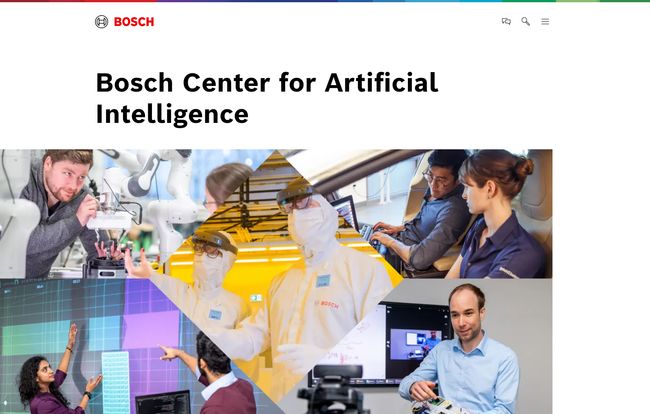
Visit Bosch Center for Artificial Intelligence
Peeking Under the Hood at Their Expertise
This isn't just about simple machine learning models. BCAI is playing in the big leagues with some genuinely complex and fascinating fields of expertise. Sure, you'll see the usual suspects like Deep Learning and Natural Language Processing, which are foundational for any modern AI work. But they're applying them in ways that matter to their business—think NLP for understanding technical service reports, not just for writing poetry.
But the real interesting stuff, for an AI nerd like me, is their work in:
- Neuro-Symbolic AI: This is a huge deal. It's an attempt to blend the pattern-matching power of neural networks with the logical, rule-based reasoning of classic AI. It’s the difference between an AI that can recognize a cat and an AI that understands what a cat is and why it shouldn't chase a laser pointer into a wall.
- Probabilistic Modeling: This is all about handling uncertainty. In the real world, data is never perfect. This field allows them to build AI that can make solid judgments even with incomplete information—critical for industrial settings.
- Reinforcement Learning, Control, and Optimization: Forget using it just to master chess. Bosch is using this to optimize energy consumption in buildings or fine-tune the movement of robotics for maximum efficiency. It's RL with a real-world paycheck.
It’s Not Just Theory, It's About Tangible Results
The best part about BCAI is that they show their work. Their website is full of "stories" that showcase actual applications. One that stood out to me was a project about using AI to protect grape vines from fungal disease. An AI-powered system analyzes weather and plant data to tell vintners the perfect time to intervene, saving crops and reducing pesticide use. That's not a gimmick; it's a genuinely useful application that demonstrates their entire philosophy.
From radar-driven learning that helps vehicles navigate tricky situations to their work on industrial AI, the theme is consistent. They are building tools, not toys. It’s a grounded approach that many a startup could learn from. It’s about finding a real problem first, then building the slick AI solution, not the other way around.
So, Who Is This For? (And Who It’s NOT For)
Okay, let's get down to brass tacks. BCAI's website isn't for everyone. If you’re a small business owner looking for a cheap AI chatbot plugin, this ain't it. You can't just sign up or download their models from a public repository. It is, by design, an internal powerhouse.
So who should be paying attention?
- AI Professionals and Students: If you're looking for a career where your AI work will have a massive, physical impact, BCAI's hiring page should be your first stop. They are actively looking for talent, and the projects are the kind that build a truly impressive resume.
- Industry Watchers and Strategists: For people like us in SEO and digital strategy, BCAI is a case study goldmine. It shows how a legacy company can authentically pivot to a tech-first mindset. Pay attention to their language, their focus on ethics, and how they brand themselves as a responsible innovator. This is how you build trust in the AI age.
- Competitors: If you're in the industrial, automotive, or manufacturing space, you should be watching BCAI like a hawk. They're setting a high bar for what integrated AI looks like.
It’s not a playground like OpenAI or a developer resource like Hugging Face. It’s a focused, industrial-grade R&D center with a clear mission. And there's a lot of power in that clarity.
More Than Just a Footnote on Ethics
I’ve seen dozens of corporate pages with a tiny, buried link to their "AI Ethics Principles." It often feels like a box-ticking exercise. Bosch, however, seems to be putting their money where their mouth is. They're a member of the AI Verify Foundation, an organization focused on creating frameworks for testing and governing AI. This isn’t just talk; it's participation in building the very guardrails the industry needs. In my book, that's a huge green flag that shows they're thinking about the long-term implications of their technology.
Frequently Asked Questions about BCAI
- What is the Bosch Center for Artificial Intelligence (BCAI)?
- BCAI is the central research and development center for artificial intelligence at Bosch. It focuses on creating and implementing safe, robust, and explainable AI applications for Bosch's various business sectors, from automotive to industrial manufacturing.
- Can I use BCAI's technology for my own projects?
- Generally, no. BCAI's work is primarily focused on internal Bosch projects and products. It's not a commercial platform or an open-source repository for public use.
- Does BCAI host any events or provide training?
- Yes, they are involved in the AI community and host events like the Bosch AI CON, which brings together experts to discuss the latest in industrial AI. It's a great opportunity for networking and learning for those in the field.
- Is Bosch hiring for AI roles?
- Absolutely. Their website features a prominent careers section. They are consistently looking for researchers, engineers, and other specialists to join their teams around the world.
- What makes BCAI's approach to AI different?
- Their core differentiator is the focus on industrial, real-world applications with a strong emphasis on creating AI that is safe, secure, and understandable. They bridge the gap between pure research and tangible business impact.
- Is there a price for using BCAI services?
- No, BCAI is not a commercial service or a SaaS product with a pricing plan. It functions as an internal center of excellence dedicated to advancing Bosch's own technological capabilities.
The Final Word
So, back to my original question. Is the Bosch Center for Artificial Intelligence just corporate fluff? My answer is a definitive no. It’s one of the most focused and practical corporate AI initiatives I’ve come across. While you won't be using their tools to generate your next blog post or profile picture, their work is arguably more impactful.
For us on the outside, BCAI serves as a fantastic blueprint for how to do AI right: with focus, a grounding in the real world, and a genuine commitment to doing it responsibly. It’s a quiet giant, and while it might not get the same breathless headlines as some other AI labs, its impact on our daily lives in the coming years will likely be far greater. And that's something worth paying attention to.


